Prepare for a Rewarding Career in Healthcare

As a Health Sciences major, you’ll gain the knowledge and skills needed for a rewarding career in healthcare or to advance into a graduate program. Our comprehensive curriculum builds on a strong foundation in the sciences, emphasizing patient-centered care, interdisciplinary collaboration, and evidence-based decision-making. With a flexible, career-focused approach, you’ll engage in real-world learning experiences tailored to your professional goals.

Available Concentrations:  

Clinical
The Clinical Concentration integrates coursework in Health Sciences, Biology, Chemistry, and Psychology, providing a well-rounded foundation in medical knowledge. Core classes such as Human Assessment, Medical Ethics, and Public Health Intervention prepare students for advanced studies and careers in healthcare. Hands-on training opportunities offer practical experience, ensuring readiness for patient care roles.

Community Health 
Prepare for impactful careers in diverse healthcare settings, including community health organizations, medical facilities, long-term care centers, wellness programs, and healthcare administration. This concentration equips students with the skills needed to address public health challenges and improve patient outcomes. 

Gerontology 
Gain specialized expertise in the physical, psychological, and social aspects of aging. This concentration prepares students for roles in long-term care, senior wellness programs, and other aging-related healthcare fields. It also serves as a strong foundation for graduate studies in gerontology and healthcare administration.
Program Highlights

  • Coursework focused on job-ready skills
  • Real-world experience through community-based learning
  • Dedicated, highly-qualified professors and experts

Simulation Labs, Research, and Community-Based Experience

Simulation-based instruction, research projects, and collaborative problem-solving help students apply healthcare knowledge in realistic settings and build confidence before entering professional environments. Students gain experience through patient-centered case work, team-based learning, and hands-on practice that supports critical thinking, communication, and clinical decision-making.

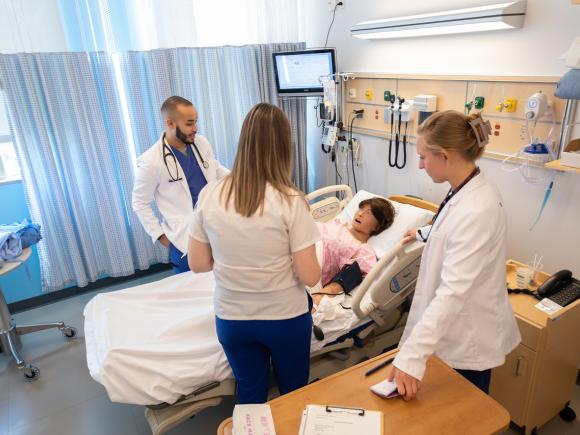
  • Three students engaged in an activity in the Simulation Lab.

    Simulation Labs That Mimic Real Situations

    Westfield State University’s simulation lab uses progressive hands-on teaching methods to replicate patient care situations. You’ll work with high-tech mannequins that simulate symptoms, diseases, and conditions you’ll see in a real patient care setting. 

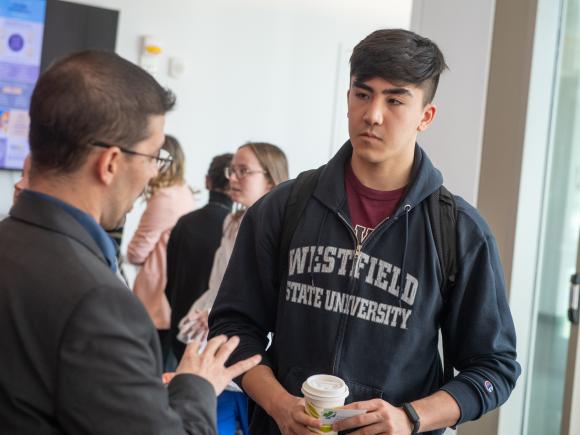
  • Student at Career Fair

    Personalized Plan for Grad School or Career

    With our rigorous core competency courses, including chemistry, anatomy, physiology, medical ethics, research methods, and public health intervention, you’ll develop a solid foundation of knowledge. You can then choose from a variety of targeted elective classes to shape your future—whether it’s entry into the healthcare workforce or graduate school, you’ll be well prepared for what’s ahead.

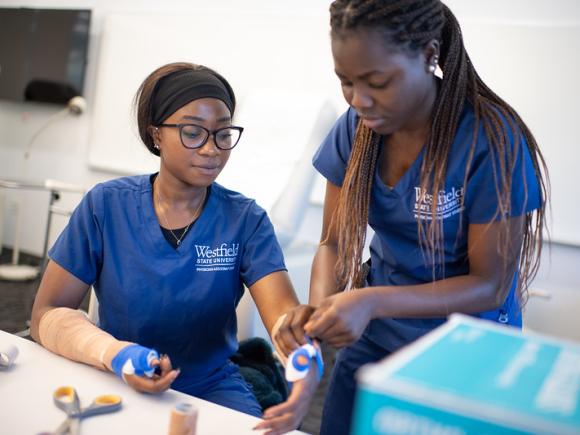
  • Splinting lab featuring two health science students in blue scrubs with WSU logos testing how to splint on eachother.

    Clinical-Focused Research Learning

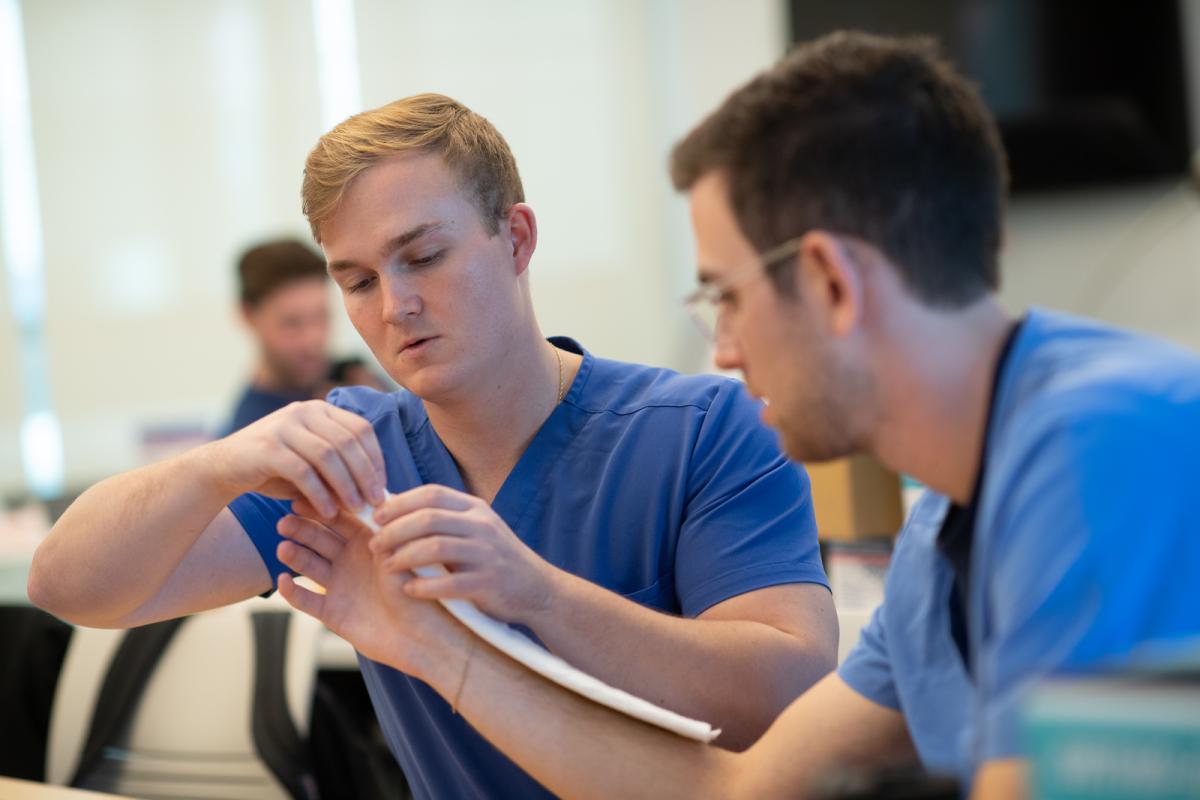
    As a Health Sciences major, you’ll take courses that emphasize case-based and problem-based instruction, along with simulation. You’ll gain hands-on experience through individual research projects and team-based problem-solving, all grounded in patient-centered care. Collaborate with clinical care centers to prepare for work in a healthcare environment.

Program Details

Program Mission

The Health Sciences program at Westfield State University provides a rigorous and interdisciplinary education designed to prepare students for professional healthcare careers or advanced studies. Rooted in patient-centered care and team-based problem-solving, the curriculum integrates foundational sciences with specialized coursework, fostering essential clinical, analytical, and interpersonal skills. The program emphasizes interprofessional collaboration and community engagement, as faculty and students work alongside campus departments, healthcare facilities, and community organizations to address public health challenges in Western Massachusetts and beyond. As the healthcare industry shifts from an illness-based to a wellness-focused model, the Health Sciences program is uniquely positioned to equip students with the knowledge and skills needed to bridge clinical and community care. The curriculum incorporates wellness theory and disease prevention strategies while integrating interprofessional education values such as teamwork, conflict resolution, and informatics. Group work, case-based learning, and simulation-based instruction are central to the pedagogical approach, ensuring graduates are well-prepared for the evolving healthcare landscape.

Students have the opportunity to specialize in concentrations that align with their career aspirations, preparing them for diverse roles in healthcare or continued education in graduate programs such as physical therapy, occupational therapy, public health, nursing, and more. Graduates may also pursue careers in fields such as cardiac rehabilitation, healthcare management, health informatics, and biotechnology. With a strong commitment to academic excellence, the Health Sciences program cultivates culturally competent professionals who are ready to make a meaningful impact in both clinical and community health settings.

Program Vision

The Health Sciences program at Westfield State University offers a dynamic and personalized education designed to prepare students for professional healthcare careers or advanced studies. Emphasizing patient-centered care and team-based problem-solving, the curriculum blends foundational sciences with specialized coursework tailored to individual career goals. Through immersive learning experiences, students develop essential clinical, analytical, and interpersonal skills necessary for success in the ever-evolving healthcare field. With a strong commitment to academic excellence, the program fosters culturally competent professionals ready to serve diverse patient populations. Students have the opportunity to specialize in concentrations that align with their aspirations, ensuring they gain the knowledge and hands-on experience needed to thrive in a variety of healthcare settings or pursue further education in graduate programs.

Learning Outcomes

Expand Student Exploration in Healthcare

  • Provide interdisciplinary coursework and immersive learning experiences that expose students to various aspects of healthcare.
  • Establish academic and experiential learning opportunities through partnerships across diverse healthcare professions.

Develop Multidisciplinary Problem-Solving and Patient Care Skills

  • Integrate interprofessional education principles to enhance teamwork, critical thinking, and problem-solving, in patient care.
  • Offer team-based learning experiences, including case studies and simulation based instruction, through collaborations with healthcare professionals.

Cultivate Leadership in the Evolving Healthcare Landscape

  • Incorporate leadership development through applied projects and experiential learning embedded in coursework.
  • Provide students with opportunities to engage in leadership initiatives that align with the wellness-focused healthcare model.

Enhance Communication and Cultural Competence in Healthcare

  • Equip students with the skills necessary to effectively interact with diverse patient populations through coursework and hands-on experiences.
  • Offer experiential learning in varied clinical and community care settings to promote cultural awareness and inclusivity.

Align Curriculum with Current Healthcare Demands

  • Ensure coursework meets prerequisite requirements for admission to graduate healthcare programs.
  • Collect and analyze graduate survey data to assess curriculum relevance and student success.

Increase Accessibility to Graduate School Pathways

  • Integrate essential prerequisite courses within the Health Sciences curriculum to support students’ timely progression toward advanced degrees.
  • Monitor student academic progression and collect data to evaluate the effectiveness of graduate school preparation.

Enhance Student Competitiveness for Graduate Programs and Professional Careers

  • Provide undergraduate experiences that contribute to at least an 80% acceptance rate into graduate healthcare programs.
  • Track graduate admission rates and career placements to assess student preparedness and success.

Expand Faculty Research and Scholarship Opportunities

  • Increase faculty involvement in research and scholarship initiatives by 25%, fostering professional development and academic excellence.
  • Engage students in faculty-mentored research and scholarly projects to enhance their critical thinking and professional experience.

Strengthen Interdepartmental Collaboration

  • Ensure that at least 80% of the curriculum is taught through interdisciplinary faculty collaboration.
  • Monitor faculty workload distribution and participation in Health Sciences courses to optimize educational effectiveness.

Careers and Graduate Pathways in Health Sciences

A B.S. in Health Sciences can support many different next steps in healthcare and related fields. The program prepares students for career paths in healthcare, public health, research, administration, and management, while also building a strong foundation for advanced study.

Depending on your career goals and any additional education or credentials required, potential pathways may include:

  • Physician Assistant
  • Physical Therapy
  • Occupational Therapy
  • Nursing
  • Respiratory Therapy
  • Medical Laboratory Science
  • Radiologic Technology
  • Surgical Technology
  • Public Health Education
  • Healthcare Administration and Management
A Physician Assistant student in a cap and gown smiles at commencement.

Ready to learn more?

Explore Healthcare from Every Angle

The Health Sciences, B.S. program at Westfield State University is built to help students connect academic study with practical healthcare preparation. Rather than approaching healthcare from only one angle, the program encourages students to learn across disciplines and build the type of flexible knowledge base that modern healthcare settings require. This means students not only learn foundational science and healthcare concepts, but also practice teamwork, communication, and problem-solving in contexts that reflect real professional environments.

  • 17:1

    student-faculty ratio

  • 87%

    of students receive financial aid

  • 700+

    Internship Opportunities

Faculty Support and Student Success

All our faculty hold graduate degrees in the subjects that they teach. You’ll get personalized attention and experience using a multidisciplinary approach to problem-solving and patient care. Your professors are committed to increasing your knowledge of healthcare through a combination of relevant coursework and individual leadership project opportunities.

Health sciences faculty smiling at commencement ceremony.

Frequently Asked Questions

What concentrations are available in the Health Sciences, B.S. program?

Westfield State University offers three concentrations within the Health Sciences, B.S. program: Clinical, Community Health, and Gerontology.

Is Health Sciences a good major for graduate healthcare programs?

Yes. The Health Sciences, B.S. program is designed to prepare students for professional healthcare careers and advanced study in health-related fields.

Does the Health Sciences program include hands-on learning?

Yes. Students in the Health Sciences program gain hands-on experience through simulation labs, case-based and problem-based instruction, research projects, team-based problem-solving, and collaboration with clinical care settings.

What kinds of careers can a Health Sciences degree lead to?

A Health Sciences degree can support pathways in areas such as physical therapy, physician assistant studies, nursing, respiratory therapy, medical laboratory science, radiologic technology, surgical technology, public health education, and healthcare administration or management.

Will I get support from faculty in this program?

Yes. Students in the Health Sciences program receive faculty support and personalized attention within a multidisciplinary learning environment.

Do I need SAT or ACT scores or an essay to apply?

Westfield State University does not require an application essay, SAT and/or ACT scores, or letters of recommendation (except for special program admissions).     

All first-year applicants are reviewed for admission based on their high school record. First-year applicants must meet the minimum eligibility requirements established by the Massachusetts Department of Higher Education (DHE) in order to qualify for admission to a state university.   

Learn more about the application process and admissions.

What is the difference between the Health Sciences concentrations?

Each concentration gives students a different academic focus. Clinical supports students interested in direct patient care or advanced healthcare study, Community Health focuses on population health and wellness, and Gerontology centers on aging-related care and services.

Is the Health Sciences major a good fit if I want a flexible healthcare pathway?

Yes. The Health Sciences major is a strong option for students who want a healthcare-focused degree with multiple concentration options and pathways into both careers and graduate or professional study.

Does the Health Sciences program include research opportunities?

Yes. Students can build experience through research projects, case-based learning, and interdisciplinary problem-solving activities tied to healthcare education.

Does the Health Sciences program include simulation labs?

Yes. The program includes simulation-based learning that helps students apply healthcare knowledge in more realistic, hands-on settings.

Can the Health Sciences degree prepare me for public health or community-based work?

Yes. The Community Health concentration is designed for students interested in community wellness, public health, and health-related work beyond traditional clinical settings.

Who is the Health Sciences, B.S. program best suited for?

The program is a strong fit for students who want to build a science-based foundation for healthcare careers, public health work, or graduate and professional programs in health-related fields.

Request Information

We’re here to answer your questions and deliver the support you need along your academic journey. Please provide your contact information and area of interest, and we’ll be in touch shortly.

Name

Health Sciences, B.S.